There’s a side of chronic illness that isn’t always visible on the outside—but it’s just as real as the physical pain, the medications, or the doctor visits. It’s the mental weight. The fear. The loneliness. The exhaustion that sleep doesn’t fix.
Living with Type 1 Diabetes and Rheumatoid Arthritis means my body is in a near-constant state of negotiation. But what people don’t always see is how much my mind is working, too. Managing the emotions, the frustration, the guilt, the grief. The unspoken worry that I’m not doing enough, or that people are quietly judging what they can’t see. So yes, chronic illness affects your body, but it takes a serious toll on your mind too. Here’s how I’ve learned to carry it.
Some Days Just Feel Heavy
I wish I could say I’ve got it all figured out. I don’t. Some days I feel sad. Defeated. Angry at my body. Tired of appointments. Exhausted from trying to stay “positive.” And there are moments, more than I’d like to admit, where I feel really, really alone in it.
There’s a particular kind of grief that comes with chronic illness. Not just for the hard days, but for the life you used to have. Or the version of yourself you thought you’d be. And when you’re constantly putting energy into just functioning, it doesn’t always leave much left for joy, creativity, or connection.
But I’ve also learned something important: you can’t stay stuck there. No one else can pull you out of it. As I often remind myself: you are responsible for your own happiness. That doesn’t mean you have to fake being okay, but it does mean you have to find ways (however small, however slow) to get up and keep going.
Make Joy on Purpose
Humor helps me survive. I’ve always been sarcastic, not in a mean way, just in a “you have to laugh or you’ll cry” way. My husband checks in with me every morning, asking how I’m feeling. If I’m in real pain, I’ll look him straight in the eye and say, “Fantastic. Never been better.” We both laugh, and somehow that makes it easier.
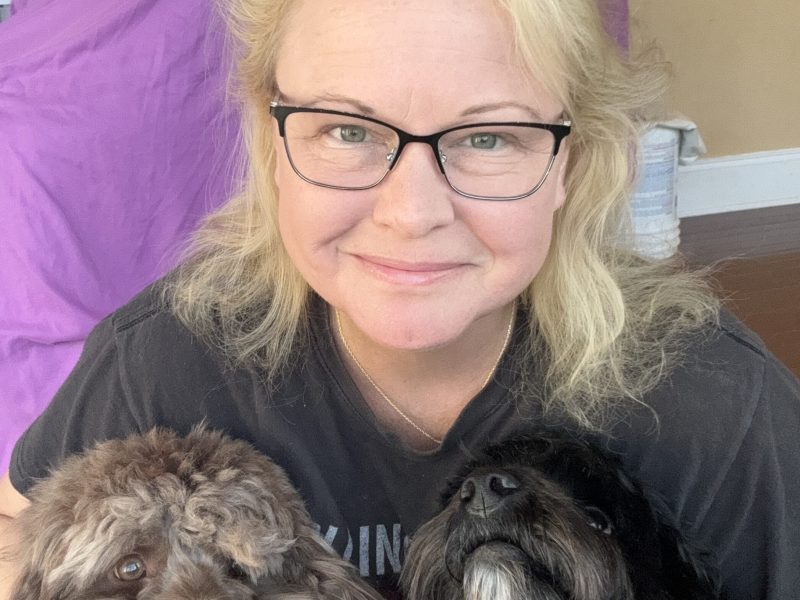
I’ve learned not to wait for joy to appear, it has to be invited. I make time for small pleasures on purpose: cuddling with my dogs, going for a walk in nature, putting on comfy clothes, and whenever I can, catching up with my friends for lunch or coffee . It’s not about pretending things are fine—it’s about carving out lightness wherever I can find it. Because when your body feels heavy, joy has to be intentional.
If I’m feeling particularly down in the dumps or stressed about my health, I like to write down three things that I do have control over, that I have the power to improve. I usually do this at night and set an intention to do them the next day. If I do all these things and my physical health still isn’t great, then I have learned to accept it, not feel guilty or feel bad about myself. I try not to let it ruin the rest of my day.
You Can’t Heal Alone
One of the biggest turning points for me mentally was finding online communities of people who just got it. People with RA, diabetes, and chronic pain, who knew what it was like to live with these lifelong conditions that test us everyday. Conditions that don’t always fit into other people’s expectations.
Some days, I just scroll through and listen. Other days, I jump into the comments, share something I’ve learned, or respond to someone else’s frustration with a little dark humor. It helps to feel seen. And it helps to see others being brave enough to tell the truth, too.
These aren’t just support groups — they’re lifelines. There’s something powerful about being part of a space where you don’t have to explain your pain. Where validation comes easily. Where your “bad day” doesn’t have to be justified.
Sadly, chronic illness and isolation and loneliness, sadly go hand in hand. But it’s important to realise that however alone you may feel, there are always others who are walking in very similar shoes. Thankfully many policymakers, doctors and local communities are waking up to the fact many people feel disconnected and are sparking movements like the Action Network from The Foundation for Social Connection Action Network, to prevent social isolation and loneliness and enhance social connection for all Americans. They have summits every June and it’s a great cause to get behind.
Rest Isn’t Weakness
One of the hardest mental shifts I’ve had to make is learning that rest isn’t a failure, it’s self-care. There are days where I have to stop. Not because I’m lazy. Not because I’m unmotivated. But because my body has had enough, and if I don’t listen, I’ll pay for it later.
On those days, I give myself permission to rest. I might curl up with a heating pad, use my TENS unit, or just give my body and brain a break from the pressure to perform. Sometimes I read or research new things to share with my community. Sometimes I just lie still with my dogs, doing absolutely nothing. And sometimes that’s exactly what healing looks like.
I’m actually a huge advocate for giving children and adults mental health days. These aren’t excuses to avoid consequences (like avoiding a colleague or peer, or an important deadline at school or work). They are to promote rest and recover after a big milestone (like a completed project or tough few weeks). They can be super effective in reducing burnout and giving us permission to look after ourselves.
You’re Allowed to Be Tired and Strong
I used to feel guilty when I couldn’t keep up. When I needed help. When I had to cancel plans, or when I wasn’t “productive.” But over time, I’ve learned this: being tired doesn’t mean you’re failing. Feeling scared doesn’t mean you’re weak.
Living with chronic illness forces you to dig deep. To keep going when you don’t feel like it. To get up again after being knocked down. And that’s a kind of strength you can’t see in the mirror, but it’s there. You can cry and still be strong. You can rest and still be resilient. You can be tired and doing your best. In fact, you probably already are.
It’s Okay to Not Be Okay
So, if you’re in it right now, scared, tired, or completely over it…I see you. You don’t have to carry it all alone. Just take it one breath, one appointment, one small act of care at a time.
If you are going through a major health setback or pain flare up, struggling with your mental health, or just need someone to talk to, I highly recommend Warmlines, supported by Mental Health America. Free and confidential, these lines are staffed by trained peers who have gone through their own mental health struggles. They also have lots of great resources on their main site.
If you are in crisis or not getting the support you need from the warmline call the Suicide & Crisis Lifeline by calling or texting 988 or accessing the online chat at 988lifeline.org. You can also text “MHA” to 741-741 to reach the Crisis Text Line.